Russian massage is a firm, methodical style of classical massage developed in Russian sports and clinical medicine, where massage was prescribed like physiotherapy rather than sold like a luxury. In practice it means deep kneading, vigorous friction and vibration techniques, applied with changing tempo across the whole body. It sits between Swedish and deep tissue: more intense than the first, broader than the second.
Where the style comes from
While Western spas were developing massage as a relaxation product, the Soviet system was developing it as a treatment. Sports institutes studied which techniques restored athletes fastest; clinics prescribed courses of massage after injuries and for chronic conditions; sanatoriums ran massage departments the size of small hospitals. Generations of therapists trained in anatomy-heavy programmes and worked under medical supervision.
That heritage shapes the style. Russian massage inherited a results-first attitude: the point of the session is the state of your muscles after it, not the ambience during it. Which is not to say it's unpleasant. It's to say the pleasant part is engineered to survive past the parking lot.
What the therapist actually does
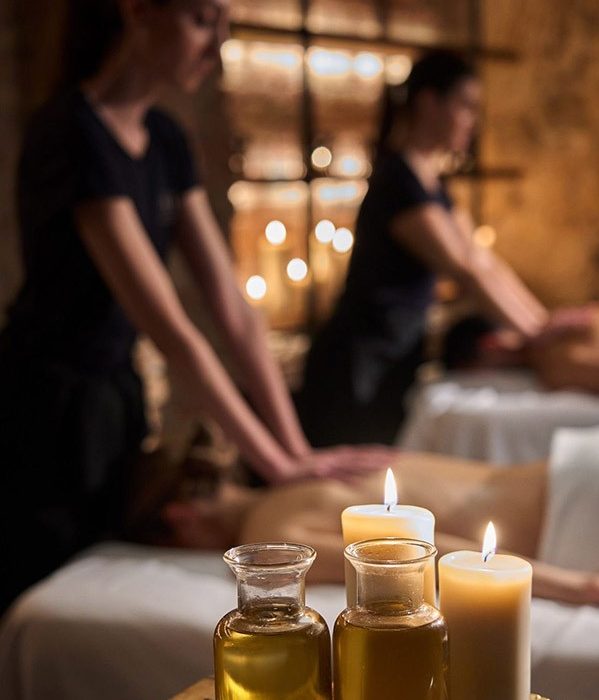
A classic Russian session moves through four families of technique, and you'll feel the difference between them:
Effleurage, long gliding strokes that open and close the session and connect everything in between. Familiar from Swedish massage, used here as preparation rather than the main event.
Kneading, the heart of the style. The therapist lifts, rolls and compresses muscle the way a baker handles serious dough. Russian schools distinguish dozens of kneading variants, and a trained therapist switches between them constantly depending on how the tissue responds.
Friction, focused rubbing across muscle fibres and around joints, where adhesions and knots live. This is the part that finds spots you didn't know were tight.
Vibration and percussion, rhythmic shaking, tapping and chopping motions that wake up circulation and nerve response. The finishing move, and the one most likely to make you exhale audibly.
The tempo shifts throughout: slow and patient on guarded muscles, brisk where circulation needs a push. That variability is the signature. A session that runs at one speed and one depth for an hour, whatever the menu called it, wasn't Russian massage.
Russian vs Swedish vs deep tissue
The honest comparison: Swedish is lighter and aims at relaxation. Deep tissue is slower and aims at specific chronic knots, one postcode at a time. Russian massage covers the full body like Swedish but at firmer pressure and with more varied technique, and it treats relaxation as a side effect of fixed muscles rather than the goal. If you've ever thought "that was nice, but nothing changed" after a hotel spa massage, Russian massage is the style built for you.
What it helps with
The classical indications, filtered through what we actually see in the massage room: desk-and-driving stiffness in the neck and lower back, heaviness in the legs, recovery between training sessions, poor sleep that tracks with muscle tension, and general fatigue of the kind Dubai's pace manufactures reliably. A course of weekly sessions changes posture-related tension patterns; a single session changes your week.
What to expect at the first session
Expect a short conversation about your body first: where it hurts, what you do all day, what you want out of the hour. Expect firm pressure that builds gradually rather than starting at maximum. Expect to be asked about depth once or twice, then expect the therapist to read your muscles instead of asking again. Mild soreness the next day is possible after a first firm session and fades within a day; we wrote separately about why a back can be sore after massage.
At U Spa in Al Barsha, Russian massage is performed by therapists trained in that tradition. Sessions run 60 to 120 minutes from AED 600, daily from 10 AM to 5 AM.
FAQ
Is Russian massage the same as deep tissue?
No. Both are firm, but deep tissue concentrates on specific problem areas with slow sustained pressure, while Russian massage works the whole body with varied technique and tempo. Related tools, different jobs.
Does Russian massage hurt?
It's intense but shouldn't hurt. The style works at the depth where you feel muscles releasing, and a competent therapist stays below the pain line. Communication fixes any drift.
How long is a proper session?
Sixty minutes minimum for full-body work; ninety is the comfortable standard that leaves time for problem areas without rushing the rest.
Who shouldn't get Russian massage?
The general contraindications for firm massage: pregnancy, acute inflammation or fever, skin conditions in the work area, recent injuries, serious cardiovascular conditions. When in doubt, ask us and your doctor, in that order or the reverse.
Why choose it over the massage styles I already know?
If Swedish leaves you relaxed but unchanged and deep tissue feels too narrow, Russian massage is the middle path: full-body coverage that actually rearranges how your back feels by Thursday.