

Three rooms on a spa floor all involve sweating, and guests use the names interchangeably, which leads to the wrong booking surprisingly often. A dry sauna, a steam room and a Moroccan hammam heat the body in three different ways, do three different things to it, and sit in different places in an afternoon. This page sets them side by side and explains how we combine them with a massage.
Three kinds of heat
A sauna is dry heat. The air is hot and the humidity is low, so the sweat evaporates as fast as it appears and the heat feels sharp rather than heavy. You sit, you sweat, you leave, you cool down, and you go back in. It is the most intense of the three and the one with the clearest rules about timing.
A steam room is the opposite: the air is cooler than in a sauna but saturated with moisture, so nothing evaporates and the heat sits on the skin like a warm wet cloth. It feels gentler, is easier on the breathing for most people, and leaves the skin softer, which is why it is the heat used in a hammam.
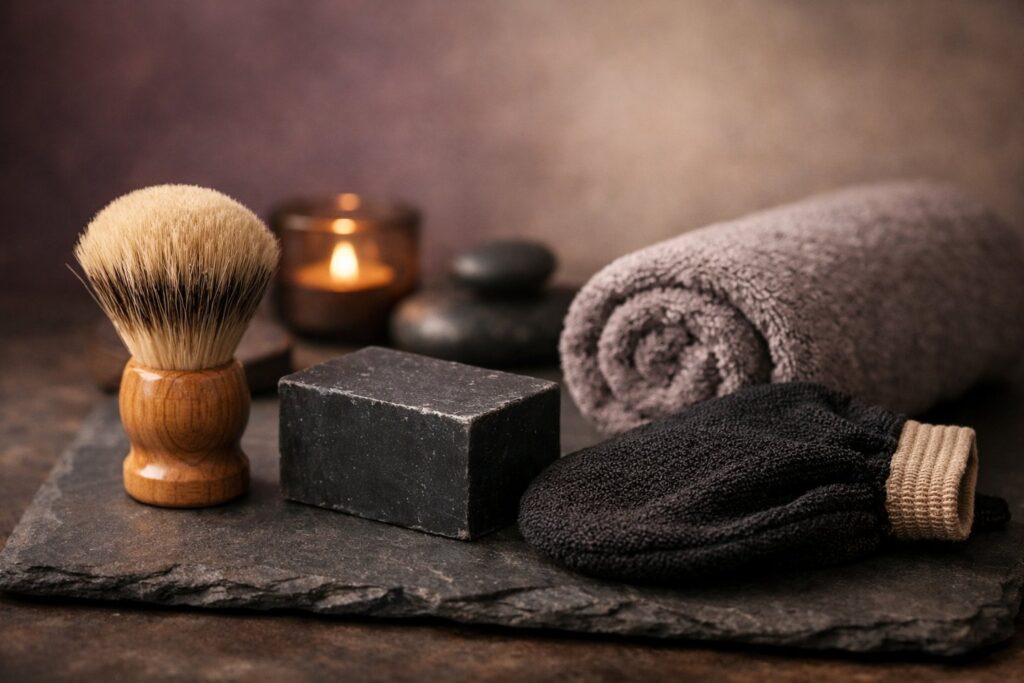
A hammam, in the Moroccan form we run, is a steam room with a ritual attached. Ten minutes of steam to open the skin, then black soap, then a scrub with a kessa glove that takes off what the steam loosened, then a rinse. It is less about sweating and more about the skin; the heat is a preparation step. We described the full sequence in what a Moroccan bath is, and the difference from the Turkish version in Moroccan bath vs Turkish hammam.
What each one does to the body
All three raise the body's temperature, bring blood to the skin and soften muscle, which is why any of them before a massage makes the massage work better. The differences are in the details.
Dry sauna heat reaches the muscle fastest and produces the heaviest sweat. It is the one to choose if the goal is to feel wrung out and loose, and the one athletes tend to book after training.
Steam is kinder to the skin and the airways. It is the better choice for anyone who finds a sauna hard to breathe in, and it does more for the skin on its own, before anyone has scrubbed anything.
The hammam does what neither of the other two does, which is actually clean the skin. Steam opens it, the soap softens the surface, the kessa removes it. The result is visible the same day and is why the Moroccan bath is booked monthly by guests who never book a plain sauna.
How long to stay
In a sauna, short rounds with real cool-downs between them do more than one long sit. Guests who try to prove something in there leave dizzy, and that is the opposite of the point. In a steam room the limit is comfort; most people are done before they need to be told. The hammam has its own clock: the ritual runs 45 minutes, or an hour for the Royal version, and the therapist sets the pace.
Drink water before, during and after any of the three. In Dubai you arrive already behind on fluids, and heat takes more out of you than it feels like it does.
The order with a massage
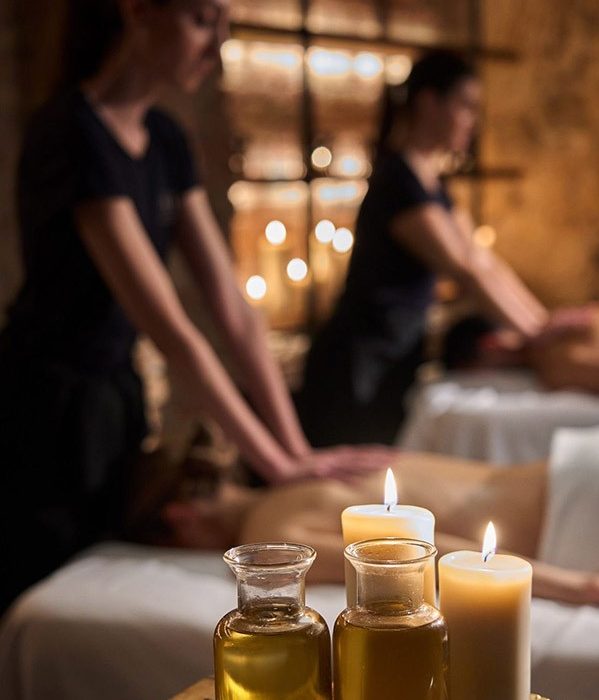
Heat first, massage second. A warm, softened body takes pressure better, and the therapist gets further in the same hour. The common sequences here are a sauna followed by a shower and a Swedish or hot stone session, or the Moroccan bath followed by an hour of any massage, which is what the body treatment bookings are.
Do not reverse it. A sauna after a deep tissue session takes the warmth out of muscles that were just worked and tends to make the next-day soreness worse. If you want heat after a massage, keep it to a warm shower. The full logic of building an afternoon is in how to plan a spa day.
Who should be careful
Anyone who has had alcohol that evening should skip the sauna entirely. Anyone with a heart condition, blood pressure problems or a recent illness should ask their doctor before any of the three, not us. Tell reception if you are pregnant and we will say plainly what is suitable. And if you feel dizzy at any point, leave the heat; nothing in a spa is worth pushing through that.
Prices
VAT included.
| Session | Duration | Price |
|---|---|---|
| Sauna | 60 min | AED 260 |
| Moroccan bath | 45 min | AED 550 |
| Royal Moroccan bath | 60 min | AED 700 |
| Standard body treatment: bath + 60 min massage | about 105 min | AED 1,200 |
| Royal body treatment: Royal bath + 60 min massage | about 120 min | AED 1,400 |
The full menu, including every massage that can follow the heat, is on the price list.
U Spa, R floor of the Donatello Hotel, Al Barsha, daily from 10:00 to 05:00. Booking by WhatsApp: +971 56 735 5473.
FAQ
Sauna or steam room before a massage?
Either works; both soften the muscle. Choose the sauna if you want to sweat hard and feel loose, the steam room if you find dry heat hard to breathe or want the skin softer. Shower between the heat and the table.
How long should I stay in the sauna?
Short rounds with cool-downs between them, not one long sit. Leave the moment you feel light-headed; dizziness is a signal, not a milestone.
Is a hammam the same as a steam room?
A hammam uses steam, but the steam is the first step of a ritual: soap, kessa scrub, rinse. A steam room on its own is just the heat. If you want clean skin rather than only a sweat, you want the hammam.
Can I do the sauna and the Moroccan bath on the same day?
Yes, with water in between and the massage last. Most guests who do both start with the sauna, move to the bath, and finish on the table. Allow the afternoon rather than squeezing it into two hours.
Is a sauna a strange thing to book in Dubai summer?
Not in an air-conditioned building, which is where you have spent the day. The practical difference in summer is hydration: you arrive drier than you think, so drink more and keep the rounds shorter.